
How Spaced Repetition Actually Works (And Why Cramming Fails Every Time)
- Lux Seminare
- Jun 25
- 4 min read

You studied for hours the night before. You knew the material. You walked into the exam confident.
Then the questions appeared and half of it was gone.
This isn't a focus problem. It isn't a motivation problem. It's a memory architecture problem and cramming makes it worse every single time.
Here's what's actually happening in your brain, and what to do instead.

Why Cramming Feels Like It Works (But Doesn't)
Cramming exploits something called short-term memory consolidation. When you review something repeatedly in a short window, your brain flags it as immediately relevant and keeps it accessible for about 24 to 72 hours.
After that, without reinforcements, it decays.
The problem is that exams rarely happen in that 72-hour window. And even when they do, the knowledge disappears shortly after, which means every semester you're starting from zero on material you've technically already learned.
You're not retaining knowledge. You're renting it.

What Spaced Repetition Actually Does
Spaced repetition works by reviewing material at increasing intervals just before your brain would naturally forget it.
The first review might happen one day after learning. Then three days. Then a week. Then two weeks. Each successful recall strengthens the memory trace, and the interval grows.
This is the forgetting curve in reverse. Instead of letting knowledge decay and relearning it from scratch, you're intercepting the decay at exactly the right moment and pushing the retention window further out each time.
The result: material moves from short-term into long-term memory.
How the SM-2 Algorithm Works (The Engine Behind Anki)
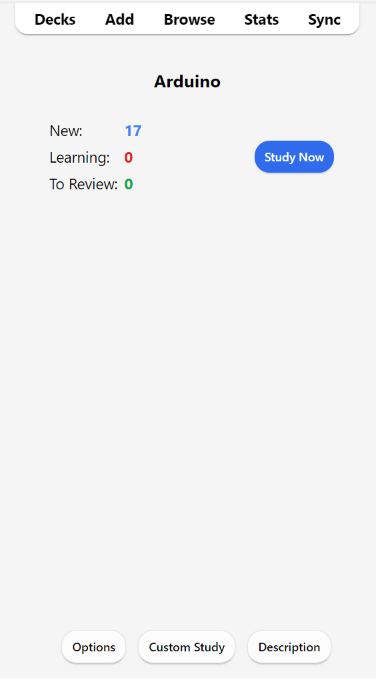
The most widely used spaced repetition model is called SM-2, developed by Piotr Wozniak in the 1980s. It's the algorithm that powers Anki, and it works by assigning each piece of material a difficulty rating after each review.
Rate something easy? The next review interval gets longer. Rate it hard? The interval shortens and it comes back sooner.
Over time the system builds a personalized review schedule based on how your memory actually performs , not a generic timetable that treats all material the same.
The problem with Anki for most students isn't the algorithm. It's that your flashcards live in a completely separate system from your actual course notes, assignments, and deadlines. You end up maintaining two systems instead of one.
How to Use Spaced Repetition Without Building Anything Complicated
You don't need to become an Anki power user. You need three things:
A log of what you've studied and when
A way to rate how well you recalled it
A queue that tells you what to review next
That's it. The system does the rest.
I built this into a free Notion template. The Learning Tracker uses SM-2 logic to auto-schedule your reviews based on your recall ratings. You log what you studied, rate it Easy, Good, or Hard, and the next review date calculates automatically.
No separate app. No rebuilding your notes. It sits inside Notion alongside your actual course material.

Setting Up Your First Spaced Repetition System in Notion
If you want to build the habit from scratch, here's the minimum viable setup:
Step 1 — Create a study log. One row per topic or resource. Add a "Last Reviewed" date field and a "Recall Rating" field (Easy / Good / Hard).
Step 2 — Add a next review date formula. If Easy → today + 7 days. If Good → today + 3 days. If Hard → today + 1 day. This is the SM-2 logic simplified.
Step 3 — Create a filtered view. Filter for all rows where Next Review Date is on or before today. This becomes your daily queue.
Step 4 — Review before studying new material. Five minutes at the start of every session to clear your queue. New content comes second.
Or skip all of that and use the free Learning Tracker where the formulas are already built in.
The One Habit That Makes Spaced Repetition Stick
The biggest reason spaced repetition fails for students isn't the system, it's inconsistency. Missing two or three days causes the queue to pile up, which feels overwhelming, which causes more avoidance.
The fix is simple: review before you study new material, not after. Five minutes at the start of every session to clear your queue. New learning comes second.
When the review queue comes first, it never piles up. The compound effect of consistent recalls builds faster than any cramming session ever could.
What's the Difference Between Active Recall and Spaced Repetition?
These two methods are often confused but they work together, not against each other.
Active recall is the act of retrieving information from memory without looking at your notes. Closing your textbook and writing down everything you remember is active recall.
Spaced repetition is the scheduling system that tells you when to do active recall. It doesn't replace the effort of remembering. Rather, it optimizes when that effort is applied for maximum retention.
The Learning Tracker uses both: you do the active recall by rating your session honestly, and the system handles the scheduling automatically.
Summary
Cramming works for 24-72 hours and fails long-term because it exploits short-term consolidation without building lasting memory traces
Spaced repetition intercepts the forgetting curve at the right moment and pushes retention further out with each review
The SM-2 algorithm personalizes the schedule based on recall difficulty where easier material gets reviewed less, harder material more
You need three things to run a spaced repetition system: a study log, a recall rating, and a review queue
The free Learning Tracker brings all of this into Notion so it lives alongside your actual coursework. No extra app, no separate system.

Comments